
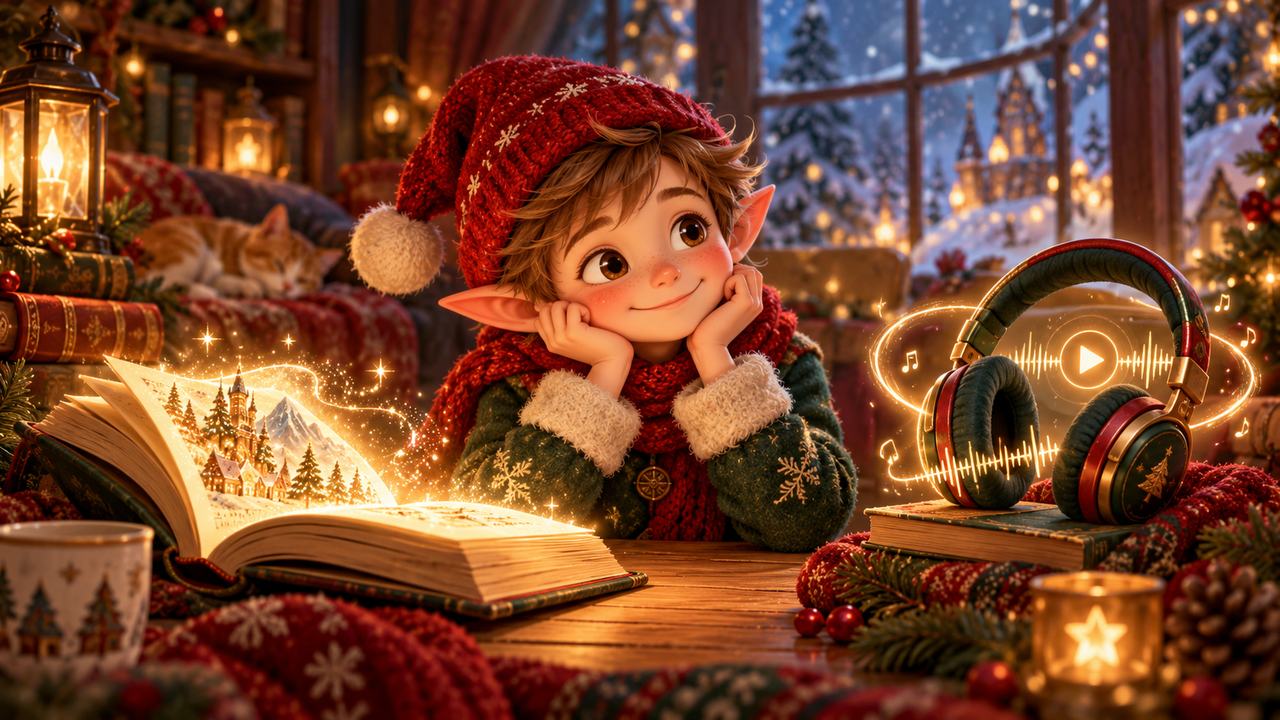
Many parents ask themselves this question: should they let their child listen to audiobooks or should they stick to paper books? Will the recording make the young reader lazy? Or maybe, on the contrary, it will help him like stories? The good news is that you don't have to choose. Both forms have their strengths, and the most benefits come from combining them wisely.
Short answer: not "either/or", but "and"
The book and audiobook develop slightly different skills. Independent reading teaches letter decoding, spelling and fluency. Listening develops listening comprehension, vocabulary, imagination and the ability to focus on a longer statement. Both forms build what is most important: love for stories. Therefore, instead of asking what is better, it is worth asking: what will work better in this specific situation?
Advantages of a paper book
- Teaches reading. Only contact with text allows you to practice recognizing letters and words. For a child learning to read, a book is irreplaceable.
- Illustrations. In books for younger children, the image is as important as the text. Looking at illustrations together is an opportunity to talk and name the world.
- Your own pace. You can stop, go back to the previous page, read your favorite fragment again.
- Closeness when reading aloud. A parent reading to a child is one of the most valuable childhood rituals - with questions, breaks and hugs.
- No electronics. A paper book does not require batteries, applications or a device that tempts you with other content.
Advantages of an audiobook
- Access to richer stories. A child who is just learning to read will only read simple sentences. By listening, he or she can learn about a story with rich language and a complex plot, which he or she will only mature into in a few years.
- A model of intonation and pronunciation. A good narrator shows what the dialogue sounds like, how to convey emotions and where to pause.
- Support for children with reading difficulties. For children with dyslexia or poor eyesight, an audiobook can be a gateway to literature they would otherwise avoid.
- Listening in every situation. In the car, in the waiting room, when sick, when the child is in bed - where reading is difficult or impossible.
- Free hands and eyes. The child can listen while drawing, stacking blocks or simply lying with closed eyes and imagining the world of the story.
- Relieving the parent. When you don't have a voice after a long day, an audiobook allows you to maintain your evening ritual - you can listen together.
Is listening “real reading”?
This question comes up in many parents' conversations. Research on text comprehension suggests that when it comes to stories - stories with characters and a plot - children and adults understand a similar amount whether they read or listen. Differences appear in difficult or informational texts: there, reading gives you an advantage because it is easier to return to the fragment and think about it at your own pace.
Listening will not replace learning to read, but it is a legitimate way of engaging with literature. A child who listens to stories, exercises his or her imagination, learns new words, follows threads and experiences the emotions of the characters - exactly as when reading.
What to choose depending on the child's age?
0–3 years: book and parent's voice
The youngest children primarily need contact with their parents, illustrations they can touch, and short, rhythmic texts. The voice of a loved one is more important here than any recording. Audiobooks and songs can be an addition, but not a replacement for reading books together.
3–6 years: time for the first audiobooks
Preschoolers can now focus on a longer story. Short audiobooks and radio plays, preferably listened to together with a parent, perfectly complement evening reading. This is also the age when children love to return to the same recordings many times.
6-9 years: learning to read comes first
During this period, the child learns to read independently, so the book should take priority. The audiobook is still valuable: it gives access to stories that are more difficult than those the child will read on their own, and keeps them motivated when reading on their own is still tiring. Listening while following the text also works great.
9–12 years: conscious choice
Older children can decide for themselves whether they prefer to read or listen, depending on the situation. For many of them, an audiobook becomes a way to "read" more books - on the way to school, while cleaning or before going to bed.
Audiobook and book – comparison
| Characteristic | Book | Audiobook |
|---|---|---|
| Learning to read | Yes, essential | Indirectly (vocabulary, comprehension) |
| Vocabulary development | Yes | Yes |
| Imagination | Yes, supported by illustrations | Yes, the child creates images on his own |
| For children who don't read | With the help of an adult | Independently |
| On journeys and during illness | It can be difficult | Perfectly |
| Your own pace, returning to the fragment | Very easy | Possible, but less convenient |
| No screen | Yes | Yes, when playing with the screen turned off or from the loudspeaker |
When to reach for a book and when for an audiobook?
- Evening before bed – preferably reading aloud. On bad days, an audiobook listened to together, with the lights dimmed. For ideas for Christmas bedtime stories, see the article about Christmas stories to read before bed.
- Long car journey – audiobook, hands down. The whole family listens to the same story and has something to talk about when stopping.
- Illness - an audiobook allows you to rest your eyes and does not require sitting.
- Learning to read – a book best suited to the child's level. Audiobook as a reward and support.
- Siblings of different ages - an audiobook with a story that will interest both younger and older children, uniting instead of dividing.
How to combine reading and listening?
- Listen and read at the same time. Your child follows the text in the ebook or book while the narrator reads aloud. This helps beginning readers connect the words they see with the sounds they hear.
- Change the form depending on the day. The same story read on Monday, listened to in the car on Wednesday. Story continuity is more important than form.
- Talk. Regardless of the form, ask: "What happened? Who did you like the most? What would you do if you were the heroine?" Conversation turns passive listening into active experiencing.
- Start with the recording, go back to the book. Children often want to read a story they know from an audiobook themselves. Knowing the plot gives you courage when dealing with more difficult texts.
Listen together, not next to each other
An audiobook is most effective when it is not a time waster, but a shared experience. Headphones on a child's ears and a parent on the phone next to them is something completely different than the whole family listening to the same story.
- Play from speaker. Listening together allows you to react on the fly: laugh, be surprised, stop the recording and explain something.
- Take pauses. At an important moment, ask: "What do you think he will do now?" This turns listening into conversation.
- Get creative with the story. Draw your favorite scene, build its setting with blocks or come up with an alternative ending.
- Back to the stories at the table. Remembering yesterday's chapter over breakfast keeps you curious and exercises your memory.
What should you pay attention to when choosing an audiobook for your child?
- Narrator – a calm, clear voice that conveys emotion without overwhelming the listener. Listen to a sample before buying.
- Length of chapters - for younger children, preferably 5-15 minutes, as long as the evening ritual lasts.
- Age-appropriate content - no scenes that may scare you before bed.
- Playback method – application without ads and without automatic activation of subsequent content, or the ability to download files and listen offline.
- Text version – if the same story is available as a book or e-book, it is easy to combine listening and reading.
One story, two forms
The most convenient thing is when you don't have to choose. In the Elfindo Advent calendar, the same Christmas story in 24 chapters is available simultaneously as an audiobook and an e-book. You can read together one evening, listen to it in the car on the way to your grandparents the next, and your older child can follow the text while listening to the narrator. The story includes the child's name, interests and wishes from the letter to Santa Claus, so regardless of the form, the child finds references to his or her own world in the story. We explain how exactly such a story is created in the article Personalized audiobook and e-book – how does it work?. For ideas on how to incorporate it into your December countdown, see the article Inspirations for an Advent calendar for children.
Frequently asked questions
Will audiobooks discourage your child from reading?
Rather the opposite. Children who like listening to stories are more likely to read books - especially those they already know from recordings. It is important that the audiobook does not completely replace learning to read at school age.
From what age can a child listen to audiobooks?
Short recordings and songs – from an early age. Longer stories with a plot usually work well from about 3-4 years of age, when the child can focus on the story for a few minutes.
Does listening to an audiobook constitute screen time?
No, if the screen remains blank. Play the recording from a speaker, player or phone placed face down. The child then uses only hearing and imagination.
How much time a day can a child listen to audiobooks?
There is no hard limit because listening does not burden the eyes like a screen does. However, it is worth maintaining balance: an audiobook should not replace play, exercise, conversation or reading together. For younger children, one or two chapters a day, listened to at regular times, works well.
Is an e-book a good replacement for a paper book?
For older children, yes, especially on an e-reader without distracting notifications. For the youngest, it is better to have a paper book or an e-book read together with a parent on a large screen, which you then use only for reading.